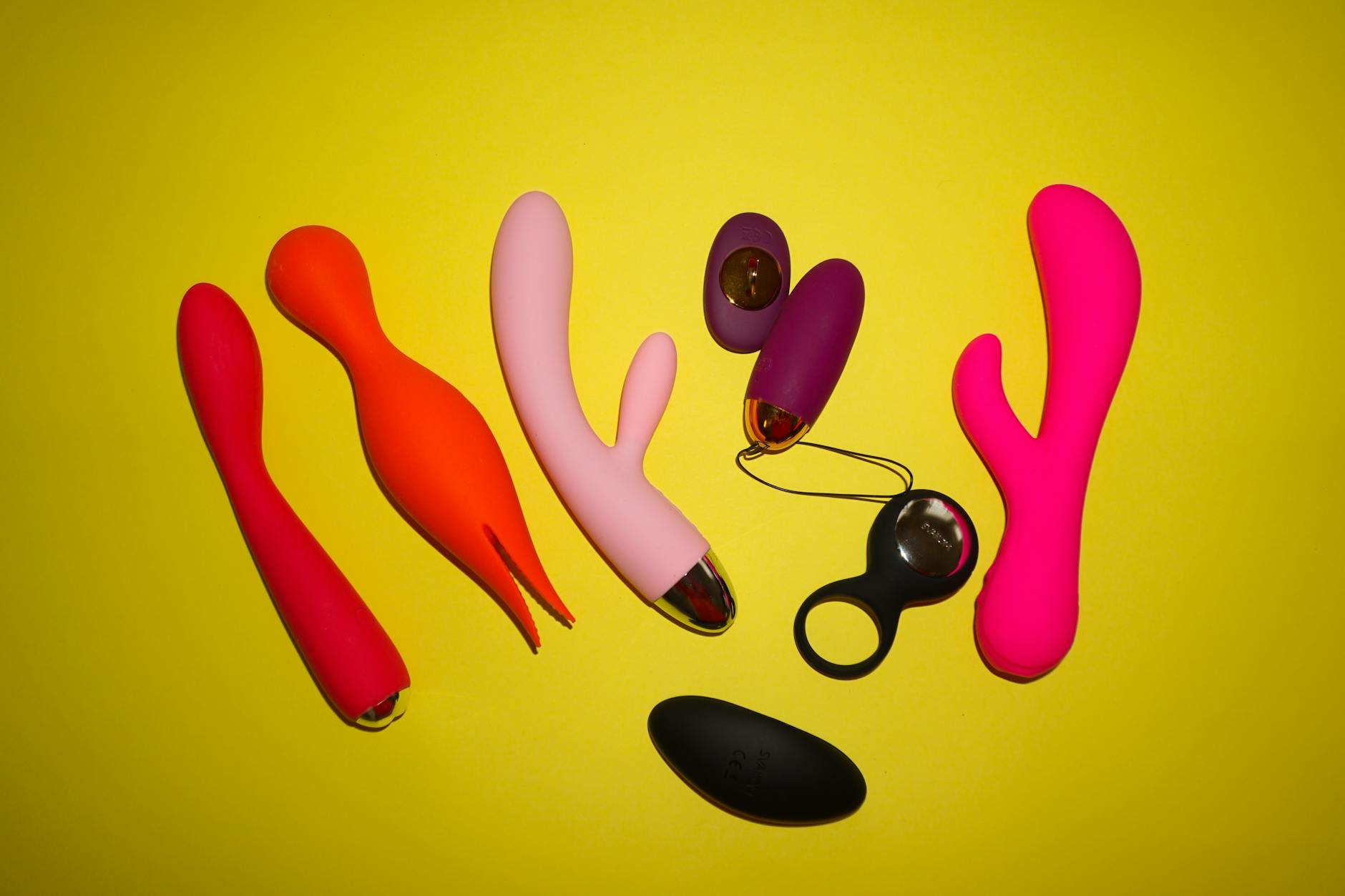
Why Lemon Clitoral Vibrators Take Longer to Work When You're Stressed
Your nervous system is hijacked by cortisol. Here's exactly what's happening to your arousal and how lemon vibrators work differently when you're under pressure.
You reach for your lemon vibrator, you've got 20 minutes, the lighting is right. And nothing happens. Or it happens slowly. Or it happens but feels muted, distant, like you're watching the experience instead of having it. You're not broken. Your vibrator isn't broken. Your nervous system is running a survival program instead of a pleasure program, and the two can't occupy the same space at the same time.
Here's what's actually happening inside your body when stress delays arousal. Understanding it changes how you approach lemon clitoral vibrators during high-pressure periods.
When you're under chronic stress, your body produces excess cortisol. This hormone floods your system with a single directive: prepare for threat. Your amygdala lights up. Your sympathetic nervous system (the gas pedal) goes into overdrive. Your parasympathetic nervous system (the brake pedal) shuts down.
Here's the problem. Arousal doesn't happen in the sympathetic state. Arousal requires parasympathetic activation. You need calm to have pleasure. You cannot be simultaneously ready to fight and ready to feel good. Your nervous system won't allow it.
This is why stressed people often describe their lemon vibrators as taking longer to work. The vibrations are reaching your clitoris just fine. The neural pathways are intact. But your brain is literally not set up to receive the signal. It's like trying to stream a video when your connection is stuck in airplane mode.
Mental bandwidth. When you're stressed, your prefrontal cortex (the part that thinks about pleasure, anticipates sensation, builds fantasies) is offline. Resources are being diverted to threat detection. You might be physically touching yourself or using a lemon clitoral vibrator, but your mind is still at work, replaying conversations, solving problems. Pleasure requires your entire system. Partial attention produces partial response.
Physical tension. Chronic stress lives in your body as muscle tension. Your pelvic floor becomes overactive and rigid. The same muscles that should relax and expand during arousal are locked down. Lemon vibrators work through vibration and suction. But if your pelvic floor is bracing, if your thighs are tense, if your jaw is clenched, the signal gets interrupted. You're essentially trying to feel pleasure through a body that's prepared for defense.
Vasoconstriction. Arousal requires blood flow to your genitals. Stress narrows your blood vessels. Your clitoris swells and sensitizes through engorgement. When cortisol is elevated, less blood reaches your vulva, so your tissues take longer to swell, sensation feels duller, and your lemon vibrator has less responsive tissue to work with. This is a real physiological constraint, not a psychological block.
Wand vibrators and lemon vibrators operate through direct stimulation. They rely on rapid tissue response. A non-stressed nervous system moves from neutral to aroused in seconds to minutes. A stressed nervous system takes 15 to 40 minutes, if arousal happens at all during that session.
You might notice that during high-stress periods, your lemon vibrator feels less intense than usual. That's not the toy failing. It's your sensory gating. When your nervous system is in protection mode, it dampens sensation. It has to. If you were fully alert to pain signals while also receiving pleasure signals, your system would crash. So it turns down the volume on everything, including pleasure.
Waiting for stress to vanish isn't realistic. You need to activate your parasympathetic nervous system intentionally. Here are the tools that move the needle.
1. Extend your exhales. Breathe in for four counts, out for six. Do this for two minutes before using your lemon vibrator. A long exhale signals safety to your vagus nerve. This is not a metaphor. The length of your exhale directly calms your nervous system. Skip the meditation app. Just breathe longer out than in.
2. Warm up your body first. A 10-minute hot shower or five minutes with a heating pad on your lower abdomen increases blood flow to your pelvis before you even touch your lemon clitoral vibrator. This gives your body a head start on the vasodilation it needs.
3. Progressive muscle relaxation. Tense each muscle group for five seconds, then release. Feet, calves, thighs, glutes, abdomen, chest, shoulders, face. This interrupts the automatic tension pattern stress creates. Your body learns it's safe to let go.
4. Move before pleasure. A 10-minute walk or 15 minutes of stretching shifts your nervous system from sympathetic dominance to a more balanced state. You don't need to exhaust yourself. You need to discharge the activation charge stress built up.
When stress is acute and ongoing, your lemon vibrator might take 10 to 20 minutes to produce meaningful sensation instead of three to five. This is normal. You're not losing your capacity for pleasure. You're experiencing the predictable neurobiology of a system running in protection mode.
Some people report needing stronger intensity settings during stressful phases. That tracks. Your sensory threshold goes up when your nervous system is partially offline. You might find yourself reaching for higher settings on your lemon vibrator when you'd normally use medium.
Others notice that solo pleasure works but partnered sex doesn't, or vice versa. This depends on where your mind needs to be to feel safe. If you can't relax around your partner during stress, your nervous system won't switch into parasympathetic mode no matter what vibrator you use. If solo time feels safer, that's where arousal will show up first.
If your lemon clitoral vibrator isn't working at all, not even after 30 minutes, and this is new for you, stress might not be the only factor. Check in with yourself. Is this also when you stopped wanting sex with a partner? When your sleep tanked? When you lost interest in things you normally enjoy? That cluster points toward depression or burnout, not just situational stress.
A conversation with your doctor matters here. Cortisol dysregulation sometimes requires more than breathing exercises. You might need to address sleep, nutrition, exercise, or medication. Your lemon vibrator will work a lot better once your nervous system has support.
Here's what I see in my practice: people with intense careers, demanding families, full schedules get stressed, then they feel guilty that their lemon vibrator "stopped working," then they stop trying to use it, then they feel disconnected from pleasure. The solution isn't a better toy. It's permission to invest 20 to 30 minutes instead of five. It's understanding that slowness isn't failure.
Your nervous system didn't break. It's doing exactly what it evolved to do when you're under threat. The good news: you can change the state. It takes intention. It takes a few minutes of warm-up. But you can absolutely access pleasure again, even when stress is high. Your lemon vibrator will work. Your body will respond. You just need to signal safety first.
No. Stress changes your nervous system's state, not its structure. When the stress resolves and you implement practices that activate your parasympathetic nervous system, your capacity for pleasure returns fully. There's no permanent wiring change. But it's also not instant. Give yourself two to four weeks of consistent stress-relief practices to notice meaningful shifts in how quickly your lemon clitoral vibrator produces sensation.
Sometimes external structure (another person, a set time, anticipation) helps your nervous system switch gears even when you're stressed. Other times, performance pressure around a partner amplifies stress. The solo experience depends heavily on what your mind associates with aloneness. If you typically use solo time to worry or catch up on mental to-do lists, your nervous system learns that solo time equals activation, not rest. Try changing the context: use a lemon vibrator in a different room, at a different time of day, or with a specific ritual that signals pleasure time, not catch-up time.
L-arginine and citrulline support vasodilation, which can help your tissues engorge faster. Magnesium glycinate calms your nervous system. Adaptogens like ashwagandha reduce cortisol in some people. None of these are magic. They're helpful supplementary support while you're also doing the nervous-system work: breathing, movement, sleep, and rest. Talk to your doctor before adding anything. Some medications interact, and some supplements are contraindicated if you have certain conditions.
Sometimes. If your sensory threshold is high during stress, a lower setting might feel like nothing. But if your body is overactivated and tense, aggressive intensity can feel uncomfortable. Start at whatever setting felt right before the stress period. If it doesn't work after five minutes, try dropping one level and giving yourself an extra 10 minutes of warm-up. The priority is parasympathetic activation, not toy settings.
Look for the pattern. If your lemon vibrator worked fine six weeks ago and hasn't changed, but arousal slowed down three weeks ago, and that coincides with a work deadline, a relationship tension, or a loss, stress is likely the culprit. If the vibrator suddenly stopped working and nothing in your life changed, check the battery, clean the device, and try it again. If it's a brand-new device and it's never worked well, it might be a fit issue or a defect. Contact support if you suspect hardware failure.
Not permanently, but yes, temporarily. Chronic stress dampens sensory perception across the board. People in high-stress periods often don't notice pain, hunger, or pleasure cues as clearly. It's protective in the short term. In the long term, it's exhausting. This is another reason addressing stress at the source matters. Once your nervous system has rest and safety, your sensory sensitivity returns to baseline.
Your lemon vibrator isn't failing you during stressful times. Your nervous system is running a different program. That program can be changed. Reset your parasympathetic nervous system first. Give your body time to shift. Then use your lemon clitoral vibrator. You'll be amazed how quickly sensation returns when your system feels safe. If you're struggling to move past chronic stress and you'd like support navigating this, reach out to us. We're here to help.