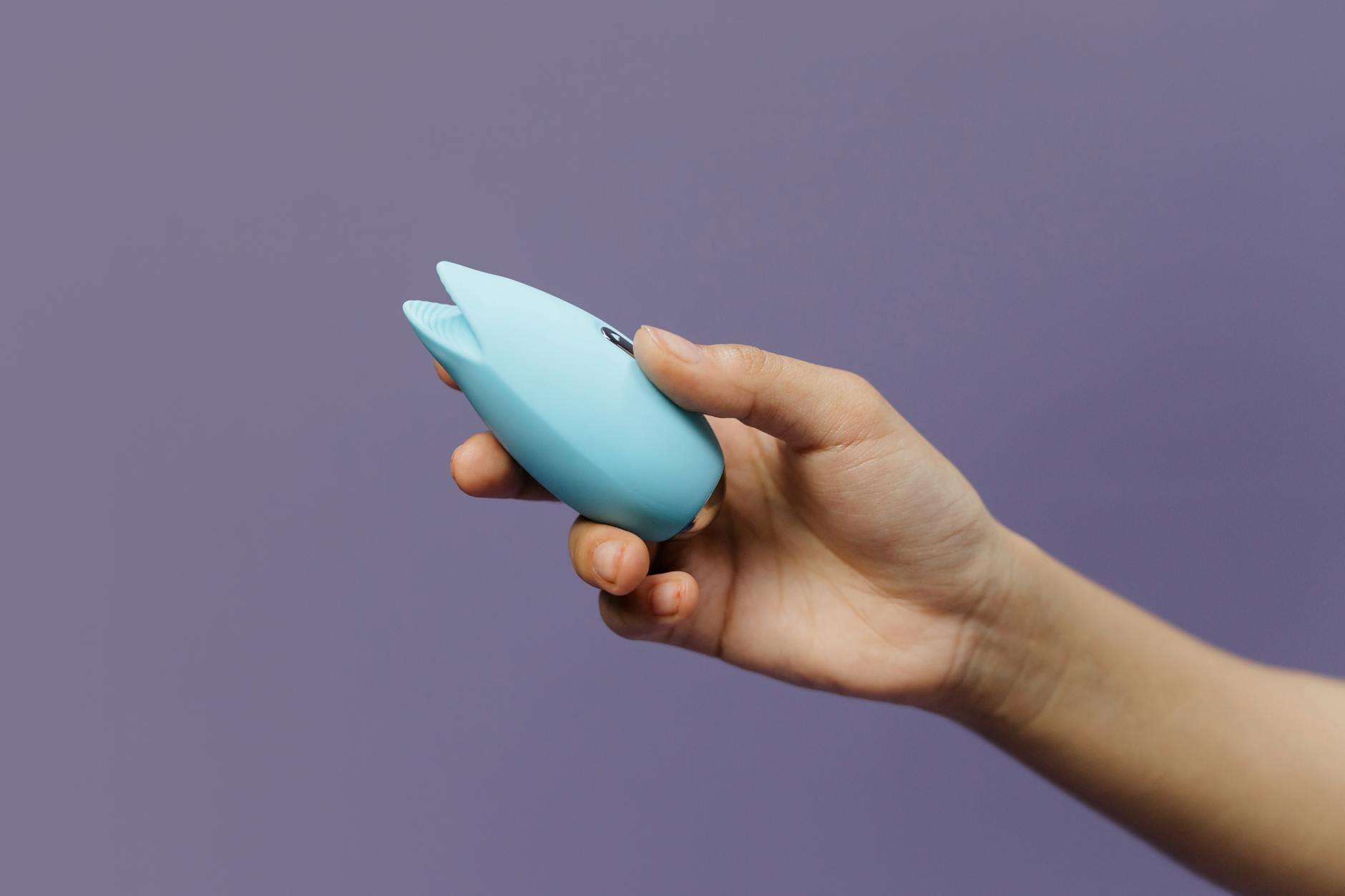
How to Use Lemon Vibrators When You Have Trouble Reaching Orgasm With a Partner
Partner sex and solo sex are completely different neurologically. Here's why lemon clitoral vibrators bridge that gap, and how to introduce them without the awkward conversation.
You can orgasm alone easily. With a partner, it vanishes. This isn't you being broken. This isn't your partner failing. It's your nervous system switching channels entirely.
When you're solo, your brain is offline except for the sensations happening right now. With a partner present, your brain is simultaneously tracking their breathing, their pleasure, whether they're bored, whether you're taking too long, whether this counts as "normal." That divided attention is the whole problem.
Lemon clitoral vibrators aren't magic wands that override your brain. They're tools that give your nervous system permission to stay in sensation instead of jumping to performance anxiety. That matters way more than you'd think.
This isn't psychology. It's neurology. During solo sex, the parts of your brain that handle self-criticism and time awareness essentially dim down. Neuroimaging studies show it clearly: your prefrontal cortex (the overthinking center) goes quiet.
With a partner, that brain region stays loud. You're simultaneously having sex and narrating it to yourself. "Am I taking too long? Does my body look weird from this angle? Should I be louder?" That running commentary eats the bandwidth you need to actually feel the vibration or pressure building toward orgasm.
A lemon vibrator works because it adds enough sensory input to essentially override the narration. You can't think about whether you're taking too long when your whole attention is on a specific, consistent pattern of stimulation.
Your body learns patterns. Alone, you've probably found a rhythm that works. Your hand, your toy, your breathing, your mental focus. All in sync.
With a partner, nothing syncs the same way. They move differently. The angle changes. The rhythm becomes about mutual pleasure instead of your single preference. Your body, trained on one pattern, gets confused.
Lemon vibrators are actually boring in the best way. The Lem and similar suction-style clitoral vibrators deliver the same pattern repeatedly, which your body recognizes as "this is happening, stay with it." That consistency matters more than intensity.
If you've been struggling, this is often the fix. Not a stronger toy. A reliable one.
Here's what I hear most often: "I'm worried they'll think I don't enjoy them enough, or that they're being replaced."
Reframe it entirely. You're not saying "You're not doing it right." You're saying "My body works better when we add this thing." That's a fact about your neurology, not a judgment about their performance.
Language matters:
Instead of: "I can't come with you" say "I come more reliably when we use vibration. Want to try it together?"
Instead of: "You're taking too long" say "My body responds differently with a partner. This helps me stay present."
Instead of: "I think you're not attracted to me" say nothing. Get tested for sensate focus with your partner instead (which we'll cover below).
Most partners are relieved. Seriously. They usually think the issue is them. Learning that it's actually a known neurological quirk of partnered sex takes so much pressure off the relationship.
Use the lemon vibrator alone for 5-10 minutes before your partner enters the picture. Get your nervous system primed. Get close to the edge. Then transition to partnered sex.
Your body already knows what arousal feels like, so the threshold is lower. The prefrontal cortex has less time to start narrating. This works particularly well if you usually need 20-30 minutes solo and your partner gets tired.
This is the most straightforward setup. You use the lemon clitoral vibrator on yourself while your partner engages however they normally would. Nothing changes except you have external stimulus on your clitoris simultaneously.
The positioning takes trial and error. Some people hold it themselves. Some partners do. Some you can angle the toy against your body so gravity helps. The key is finding what lets your partner move without obstruction.
Start with lower vibration settings. Pattern 2 or 3 on most lemon vibrators. Higher settings sometimes create too much sensation and your nervous system backlashes into numbness.
This is for couples where the pressure has really built up and nobody's relaxed anymore. Set a time. Remove the goal of orgasm entirely. Just explore sensation with the lemon vibrator as part of foreplay, no "destination."
This sounds woo but it's practical: when there's no performance expectation, your prefrontal cortex actually relaxes. You can feel what the vibration adds without thinking. And often, paradoxically, that's when orgasm actually happens.
Lemon vibrators work better at certain points in your cycle if you menstruate. Estrogen is high in the follicular phase (first two weeks), and your clitoris is more sensitive and responsive. You need less vibration intensity and arousal comes faster.
In the luteal phase, after ovulation, everything takes longer and feels muted. If you've been struggling during this phase, it's not relationship trouble. It's hormones. That's when you might bump up to a slightly higher intensity setting or add more warm-up time.
If you're on hormonal birth control, this cycle flattens out, so sensitivity is more consistent month-to-month. If you're menopausal or post-menopausal, clitoral sensitivity often requires more sustained stimulation. A lemon vibrator is perfect for this because you can keep it going longer without fatigue.
If you've tried a lemon clitoral vibrator in all these configurations and still can't orgasm with a partner, the issue isn't mechanical. It's relational or neurological.
Things that actually help:
Working with a sex therapist. Not a therapist, a sex therapist. There's a difference. They specialize in the specific neurology of partnered pleasure, not just relationship dynamics.
Checking in with your partner about the actual dynamic. Sometimes the reason you can't relax is because you genuinely don't feel safe or seen. That's real and no vibrator fixes it.
Getting screened for medication side effects. SSRIs, birth control, blood pressure meds. They all flatten arousal in different ways. Your doctor might have alternatives that work better.
Honestly assessing whether your partner is actually interested in your pleasure. If they push back on the vibrator, don't want to learn what works, or make it about their ego, that's information. The vibrator didn't create that problem. It just exposed it.
They give your nervous system a focal point when your attention is split. That's genuinely powerful. But they're not fixing a broken body. They're just making room for the one you already have to relax enough to function.
You deserve to orgasm with your partner if that matters to you. And that deserves to happen without shame, without performing, without your brain narrating the whole time. Sometimes that just needs a tool. That's not cheating or inadequacy. That's working with how you're actually built.
Yes, mostly. The angle of your toy relative to your partner's movement matters. Some couples find that smaller vibrators work better because there's less obstruction. You might need a short learning curve to find what angle keeps you stimulated without creating friction problems. If it feels awkward, try starting with vibration during foreplay, then removing it for penetration, then using it again toward the end. You don't have to keep it on the whole time.
Not if you talk about it first. Frame it as "my body needs this in addition to you, not instead of you." Most partners actually feel relieved when they learn that the inability to orgasm is neurological, not their fault. In fact, many say sex becomes more relaxing once the pressure lifts. Your partner likely wants you to feel good. A tool that makes that possible is usually welcome.
That's a value conversation, not a pleasure conversation. Some people have feelings about what "counts" as real sex. Those feelings are real, and they deserve discussing. But your pleasure also deserves to be real. If that's a fundamental incompatibility, that's worth knowing. A vibrator doesn't create that conflict. It just reveals it.
Usually 2-4 partnered sessions. Your nervous system needs to learn that "vibration present" equals "it's safe to focus on sensation." The first few times might feel strange or distracting. By the fourth time, your brain starts associating the vibration with arousal and it gets easier. If nothing has shifted by session five, something else is probably the limiting factor.
Lemon clitoral vibrators use suction or air-pulse technology, which stimulates deeper nerve clusters compared to traditional buzzing vibrators. That deeper stimulation often works better during partnered sex because it's less surface-level and easier to feel even when your attention is divided. They also tend to be quieter and less disruptive to the flow of sex, which helps your partner stay present too. That said, any consistent vibrator can help. The shape and mechanism matter less than using something you actually enjoy.
Your nervous system is just learning the pattern of the vibrator. If you want to expand that, slowly reduce vibration intensity over time, or practice transitioning from vibration to your partner's touch while you're still aroused. Your body can learn that non-vibrating touch also leads to orgasm. It just takes practice and patience, same as when you first learned to come at all.