Let's name what's actually happening
Your partner thinks vibrators mean you don't want them anymore. They believe a lemon vibrator replaces intimacy, threatens their masculinity or femininity, or proves they're not enough. None of those things are true. And none of those things will resolve by ignoring the conversation or sneaking toy use when they're not home.
Here's what I see in my practice: the problem was never the vibrator. The vibrator just exposed something that was already there—an unspoken fear, a gap in communication, or a misalignment about what pleasure means to both of you.
I'm going to walk you through how to navigate this, because toy use isn't a solo decision in a partnership. But pleasure is your birthright, and finding a path forward where both of you feel heard and connected is entirely possible.
Why partners feel threatened by lemon vibrators
It's not actually about the toy. It's about meaning. Your partner might be thinking one of three things:
"You're not satisfied with me." This one's the most common. They're equating vibrator use with dissatisfaction in the relationship, which feels like a threat to their identity as a lover. The logic is flawed, but the fear is real.
"You prefer it to partnered sex." Some partners worry that once you discover vibrators, you won't want their touch anymore. They see it as competition, not complement. This often comes from low confidence about their own sexual skills or attractiveness.
"This is too intense or weird." Sometimes the resistance is about discomfort with the topic itself, not jealousy. They grew up with shame around pleasure devices, or they've absorbed cultural messaging that toys are "unnecessary" or "desperate." They're not actually against you having pleasure. They're uncomfortable with the method.
None of these are reasons to abandon your own pleasure. But they are reasons to have a real conversation before you introduce a lemon clitoral vibrator into shared intimacy.
The conversation before you bring it home
Timing matters. Don't bring this up mid-sex or when either of you is tired, stressed, or defensive. Pick a calm moment, ideally during the day when you're both relaxed.
Open with curiosity, not declaration. Instead of "I want to get a vibrator," try: "I've been thinking about my own pleasure, and I'm curious what you think about couples exploring toys together." This signals you're asking for partnership, not announcing a decision.
Listen first. Really listen. Let them tell you what they're afraid of without jumping to defend yourself. If they say "I feel like I'm not enough," don't respond with "That's not true." Instead: "Tell me more about that. When did you start feeling that way?"
Then share your actual reasoning. If you're wanting a lemon vibrator because you've never had consistent orgasms, say that. If you want to experiment with sensation play together, say that. If you want something solo because you need 20 minutes alone sometimes, that's valid too. But be honest about the why.
Most importantly, explain what a vibrator actually does. A lot of partner resistance melts when they understand that vibrators aren't replacement partners. They're tools that stimulate the clitoris in ways a hand or mouth can't. It's the difference between a vibrator being a threat and it being a physical aid, the same way a prosthetic isn't a replacement for a limb. It's accommodation.
How to introduce lemon sexual toys into partnered pleasure
If your partner's fear is "you'll prefer it to me," the antidote is integration. Don't hide toy use. Bring it into shared intimacy.
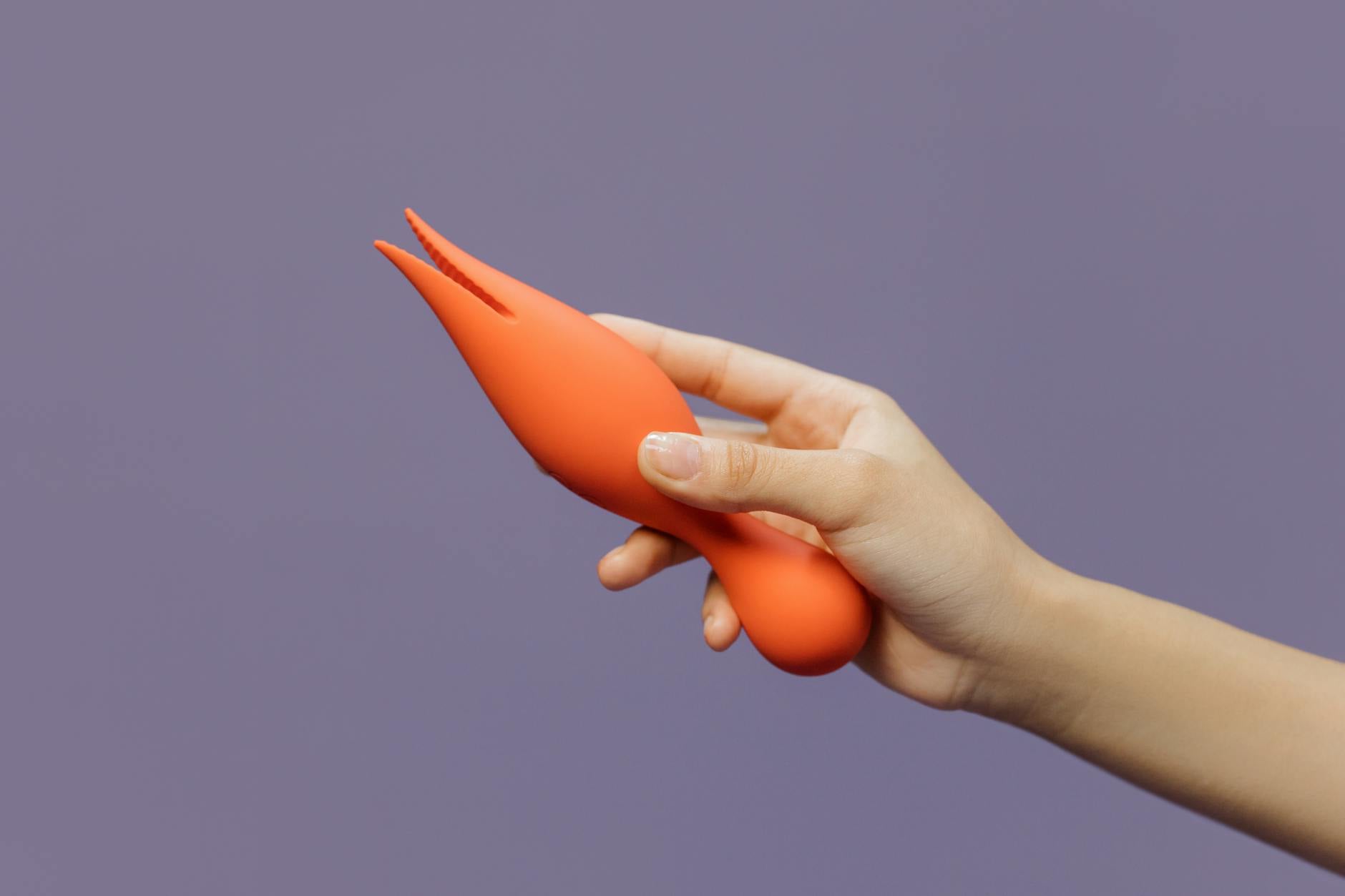
Start with a toy that's small and unintimidating. The Lemon Clitoral Vibrator is designed for that reason, actually. Its size and shape make it feel like an extension of shared touch, not a third party in the bed.
Introduce it during partnered sex, not before. Let them be involved. Say something like: "I want to try this while you're inside me" or "Can you hold this while you're touching me?" This makes the toy collaborative, not solitary.
Use it on your own first, in front of them if possible, without pressure. Let them see you experience pleasure. This often flips the script from "you prefer it" to "I want to make that happen for you too." Witnessing genuine pleasure is often way more arousing than defending territory.
Go slow. Don't bring vibrators into every encounter. Use them sometimes. Let partnered sex without toys still be the norm. This prevents the fear that toys are becoming a dependency or replacement.
What happens when they still resist
Some partners will come around with conversation and time. Some won't. If they refuse to engage with toy use even after you've explained, you need to decide what that boundary means.
You deserve pleasure. Full stop. That might look like solo toy use when they're not around. It might look like using toys during partnered sex anyway, respectfully but firmly. It might look like working with a couples therapist to understand why this is such a charged issue. Or it might look like recognizing that misalignment on sexual needs is a bigger conversation about relationship compatibility.
What it shouldn't look like is abandoning your own pleasure to manage someone else's insecurity. That path doesn't lead anywhere good.
The nervous system beneath the resistance
Here's something worth understanding: when your partner resists toys, their nervous system often registers it as rejection of them, even if that's not what's happening. They're not being rational. They're being scared.
This is why anger or impatience makes it worse. When you get defensive ("Why do you have to make this about you?"), their nervous system reads that as confirmation that you're pulling away. Instead, what actually works is reassurance paired with boundary setting.
"I love you. This isn't about you not being enough. And I'm going to explore my own pleasure because I deserve that. I want you with me on this journey, but I'm going either way." That combination—love plus firm boundary—often softens resistance more than anything else.
If they feel genuinely heard and genuinely assured that you're not leaving, most people will eventually come around. Not all. But most.
When to bring in outside help
If the conversation keeps stalling, if you find yourself walking on eggshells, or if toy resistance is part of a bigger pattern of your partner controlling your body or choices, it's time to talk to a couples therapist. This isn't failure. It's smart.
A good therapist can help you both understand what the vibrator actually represents to him or her, and can create space for a conversation that feels safer for both of you. Sometimes partners just need a neutral third party to hear from a professional that vibrators don't damage relationships. They actually improve them, when communication is solid.
The version of pleasure that includes both of you
Here's what I've seen happen when couples move through this well: toys stop being "her thing" and become "our thing." Not because the partner suddenly feels less insecure, but because they've been invited in. They get to witness your pleasure. They get to participate. They get to feel skilled at creating sensation you love.
That's not compromise. That's expansion. You don't lose solo pleasure time. But you also find new ways to be intimate together that involve vibrators as tools, not threats.
Your partner's feelings about lemon vibrators matter. So do yours. The conversation is where you figure out how to honor both.
People also ask
Should I hide vibrator use if my partner doesn't approve?
Not long-term. Secrecy erodes trust more than the vibrator ever could. You can have solo pleasure privately without advertising it, but if you're actively hiding it, your partner will eventually find out, and the betrayal will hurt way more than the toy ever could have. Better to have the hard conversation now.
Does using a vibrator mean I don't want partnered sex anymore?
No. Vibrators and partnered sex serve different purposes. A vibrator can give you consistent clitoral stimulation that a partner often can't. That doesn't replace the intimacy, vulnerability, and connection of partnered sex. Most people who use lemon sexual toys still want and enjoy partnered intimacy. The two can absolutely coexist.
What if my partner wants to use the vibrator on me but I don't want them to?
That's a boundary you get to set. Some people feel more comfortable using toys solo. Some want to use them together. Some don't want partner involvement at all. Your comfort matters. If you want to use lemon clitoral vibrators solo, that's valid, and your partner needs to respect that. Conversely, you also need to respect that they might feel left out. Find the configuration that works for both of you.
Can vibrators actually improve partnered sex if my partner learns to use them on me?
Absolutely. Many partners discover that adding a vibrator during partnered sex makes their partner more orgasmic, which makes sex more satisfying for everyone. Once the insecurity fades, a lot of partners actually become advocates for toys because they see the direct benefit. The key is getting past the threat phase first.
How do I know if this is a dealbreaker difference in the relationship?
It becomes a dealbreaker when your partner won't engage in conversation, when they're controlling about your body, or when misalignment on sexual needs is part of a bigger pattern of your autonomy being restricted. Sexual compatibility matters in relationships. If it's important to you and they absolutely refuse, that's worth taking seriously. But most people aren't actually dealbreaker about this. They're scared. Those are solvable.
What if I've already introduced toys without talking first?
Honestly, have the conversation now. Apologize for skipping the conversation part. Explain what you actually wanted. Listen to what scared them. Then build a new plan together. It's not too late to do this the connected way, even if you didn't start that way.
The real work is the conversation
Toys don't break relationships. Secrets do. Resentment does. Unmet needs do. But a lemon vibrator in the hands of two people who actually talk about desire and pleasure? That strengthens connection, not threatens it. The vibrator is just the tool. Your willingness to be honest about what you need is what actually changes things.
If you're stuck on how to have this conversation or you need help navigating deeper relationship patterns around sex and intimacy, reach out to The Lemon Sucker for support. Sometimes it helps to talk through it first before bringing toys into the mix.
Sources
Gottman, J. M., & Silver, N. (2015). The Seven Principles for Making Marriage Work: A Practical Guide from the Country's Foremost Relationship Expert. Harmony.
Meston, C. M., & Frohlich, P. F. (2000). The neurobiology of sexual function. Archives of General Psychiatry, 57(11), 1012-1030.
Perelman, M. A. (2005). Regarding the multifactorial basis of sexual response and desire disorders: An integrative working definition. Journal of Sex & Marital Therapy, 31(5), 375-385.