Let's name the thing nobody talks about
You left one relationship and entered another. Everything felt new. And then you noticed: the way your body responds to touch is different now. The things that used to light you up don't work the same. You might feel less desire, more desire, or desire for entirely different things. And you're wondering if something is broken, or if this is just what happens when you switch partners.
It's not broken. It's chemistry. And it's complicated in ways that go way deeper than your nervous system.
Why your pleasure map rewires when you switch partners
When you've been with someone for years, your body learns their patterns. Your nervous system anticipates their touch. Your arousal pathway gets worn smooth by repetition. Then you meet someone new, and suddenly nothing is automatic anymore.
Here's what's actually happening physiologically. Your body is learning a brand new map of touch. The pressure is different. The timing is different. The emotional cues are different. The person's smell, the way they breathe, the rhythm of how they move. Your brain has to build an entirely new arousal network from scratch.
Add to that the psychological stuff. You might be grieving the old relationship. You might be scared of vulnerability with someone new. You might be unconsciously protecting yourself from getting hurt again. You might be measuring this person against your ex, which is basically the worst thing you can do to your own pleasure.
New relationships don't break desire. They just ask your body to learn a completely new language.
The role of novelty and safety
There's a paradox here that matters. Arousal needs both novelty and safety. With a long-term partner, you have safety but not novelty. With a new partner, you have novelty but not necessarily safety. Your body doesn't perform well when one of those is missing.
In a new relationship, your brain is actually working harder than it was before. You're scanning for threat. You're assessing trustworthiness. You're managing uncertainty. All of that cognitive load happens below the surface, but it absolutely tanks arousal. Your nervous system is in a slightly elevated alert state, which is incompatible with the relaxation that pleasure requires.
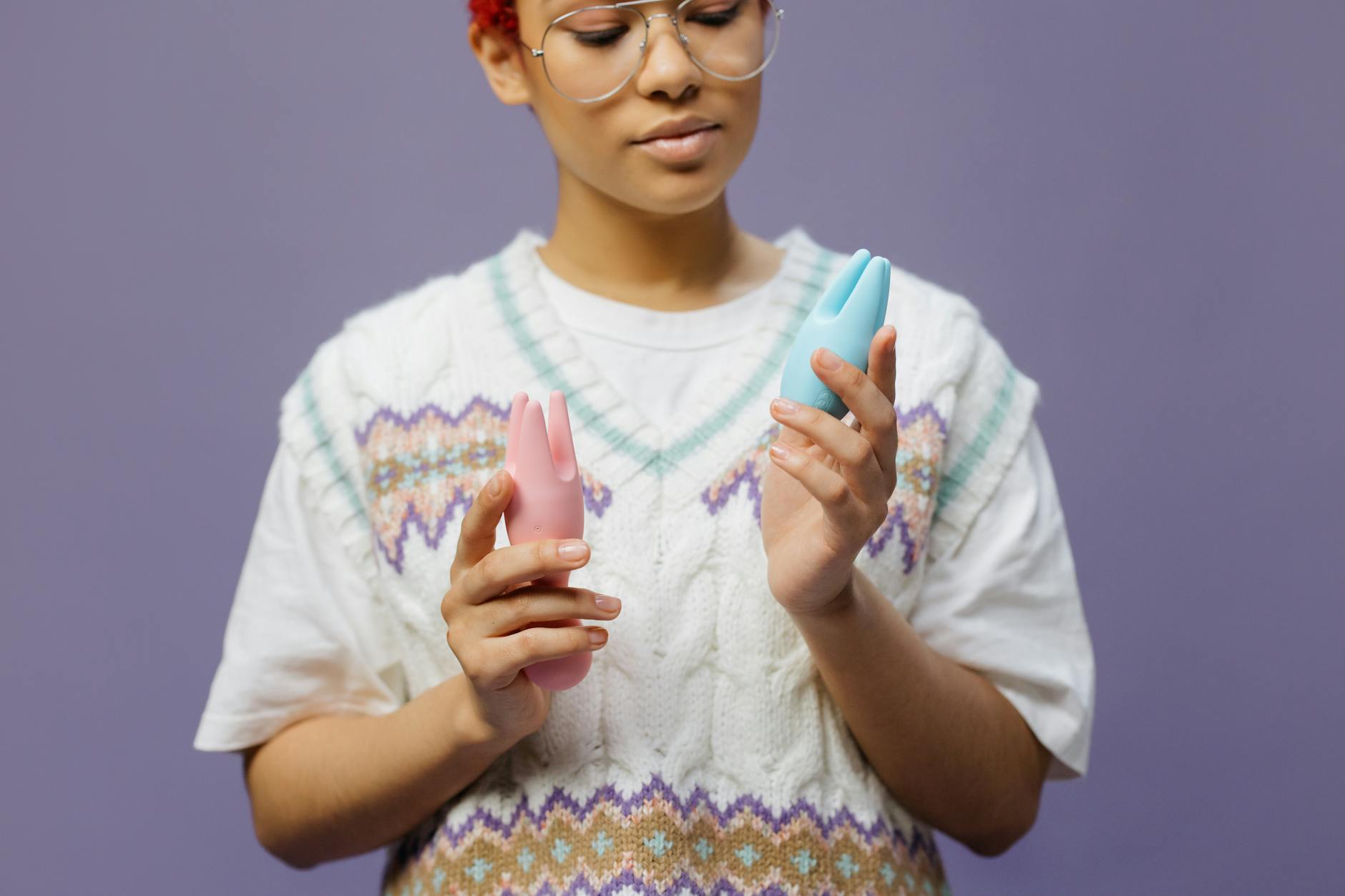
This is why solo play becomes so valuable right now. When you're alone with a lemon vibrator, there's no one to compare yourself to. There's no performance pressure. There's no body in the room that's unfamiliar. It's just you and your own pleasure, which is where the reset happens.
What lemon clitoral vibrators actually do for this transition
Lemon vibrators work through air-suction technology, which stimulates the nerves around the clitoris without direct friction. When you're rebuilding desire after a relationship change, this matters because it bypasses all the stuff your brain is doing and talks directly to your body's pleasure response.
The suction pattern of a lemon vibrator is also consistent. It doesn't vary based on someone else's mood or energy. It doesn't have expectations attached. For someone relearning how their body works in a new context, that consistency is grounding. Your nervous system relaxes into something predictable.
Many people find that using a lemon sexual toy solo helps them rediscover what actually feels good, separate from what they think should feel good or what felt good with their ex. You're not trying to have an orgasm for anyone else. You're just exploring what your body wants right now. That exploration is the whole point.
How to use lemon vibrators without the comparison trap
The biggest mistake people make in this phase is trying to prove that sex is the same as it was in the last relationship. It's not. Your body is different. The relationship is different. Your emotional state is different. Accepting that is where the good stuff starts.
When you sit down with your lemon vibrator, set a timer and give yourself at least 20 minutes. Not for an orgasm. For exploration. Start at a lower setting. Pay attention to where sensation actually lands. Notice if there are parts of your body that want attention now that didn't before. Notice if the pressure that used to work no longer feels right. None of this is good or bad information. It's just information.
If you don't come, that's not a failure. Your body is recalibrating. Sometimes that takes multiple sessions. Sometimes it takes permission to feel pleasure that looks different than it used to. The goal is curiosity, not performance.
The conversation you might need to have with your new partner
If you're in a relationship, and you're noticing that desire feels different, you have to decide what to tell them. That's a separate decision from the solo work you're doing. You don't owe anyone an explanation for exploring your own body. But if you're living together or sleeping together, your partner will notice the shift eventually.
The honest version sounds something like: I'm learning what my body wants in this relationship, and it's different from before. I'm doing some exploring on my own to figure it out. That's not about you or about us. It's just my body settling in. If they respond with defensiveness or insecurity, that's useful information. You'll know you're with someone who prioritizes their feelings over your pleasure.
The right partner will actually want this for you. They'll understand that you can't just download the pleasure map from your last relationship into a new one. Your body has to genuinely learn them.
When desire stays low and what to do about it
Sometimes the issue isn't that desire feels different. It's that desire feels absent. You meet someone you like, and you're just not that turned on. This can happen for months, and it's genuinely disorienting.
Before you assume something is broken, check a few things. Are you sleeping enough? Are you stressed about other things in your life? Did you recently change medications? Are you still grieving the last relationship? Are you scared of intimacy? All of those things suppress desire more reliably than anything else.
If none of those factors apply, use a lemon clitoral vibrator to jumpstart your nervous system. Stimulation can sometimes wake up desire that's just dormant, not dead. But if you give yourself a month of consistent solo play and nothing shifts, and the relationship is otherwise good, it might be worth talking to a therapist. Low desire in a new relationship can sometimes signal that your body doesn't trust this person yet, and that's data.
The timeline thing nobody mentions
Here's what's true: it usually takes three to six months for your body to feel fully settled into a new partner's body. That's not a problem. That's normal. By month three, you'll probably notice that touch feels more familiar. By month six, you might realize that arousal is building more quickly. That's your nervous system doing its job.
In the meantime, lemon vibrators are not a Band-Aid. They're a tool for understanding yourself while your body is in transition. And that's actually the more valuable work. When you know what your body wants independent of another person's touch, you can communicate better. You can ask for what you need. You can feel less confused about what's happening.
The desire will return. It just might look different than it did before. And different is not the same as less.
FAQ: Desire After Switching Partners
Is it normal to have lower desire when you're in a new relationship?
Completely normal. Your nervous system needs time to build safety with a new person. Arousal happens in the parasympathetic nervous system, which is the relaxation state. When you're still assessing a new partner, your body stays slightly vigilant. That vigilance is incompatible with the deep relaxation that pleasure needs. Give it time. Use solo play to keep your body's pleasure response active while you're building trust.
Can I use a lemon vibrator with a new partner, or should I wait?
There's no rule. Some people introduce a lemon vibrator together as part of discovery. Some people use it solo first to understand their own body, then bring it into partnered sex later. The key is that you're using it from a place of curiosity, not from a place of your partner not being enough. If you're using it because you're genuinely interested in exploring, most partners will respond well to that. If you're using it because you're resenting them, that will come through.
What if my new partner thinks I use a vibrator because they're not good enough?
That's insecurity on their part, not a reflection of reality. A lemon sexual toy does something a partner's body literally cannot do. It's not a comparison. It's a different experience. If you need to have this conversation, frame it that way. You're not choosing the vibrator over them. You're using it to better understand your own pleasure, which ultimately benefits the relationship. If they can't get comfortable with that after a conversation, that's a compatibility issue worth paying attention to.
How long does it usually take to feel desire again with a new partner?
This varies wildly depending on the person and the relationship. Some people feel desire shift back to normal within two to three months. For others it takes six months or longer. If you've been with someone for five years and then switch partners, give yourself at least three months before you assume something is wrong. Your body isn't lazy. It's just learning.
Should I fake it while I'm waiting for desire to return?
Absolutely not. Faking it teaches your body that pleasure doesn't matter, which makes the transition take even longer. Be honest about where you are. You don't have to have sex when you're not feeling it. You can be affectionate. You can be intimate without penetration. You can tell your partner that you need time. A good partner will understand. A good partner will want you to actually want them, not just perform.
Can using a lemon vibrator solo actually help me feel desire with my partner?
Yes, often. When you stimulate your nervous system regularly, you stay connected to your body's pleasure response. That makes it easier for your body to access arousal in general. Plus, when you understand what your body wants independent of your partner, you can communicate more clearly about what you want with them. Self-knowledge almost always translates to better partnered sex.
Between you and me, switching partners is one of the most disorienting physical experiences there is. You're not broken. Your body is just learning a new person. Give yourself permission to move slowly, to explore solo, and to let desire rebuild on its own timeline. That's where the good stuff actually happens.