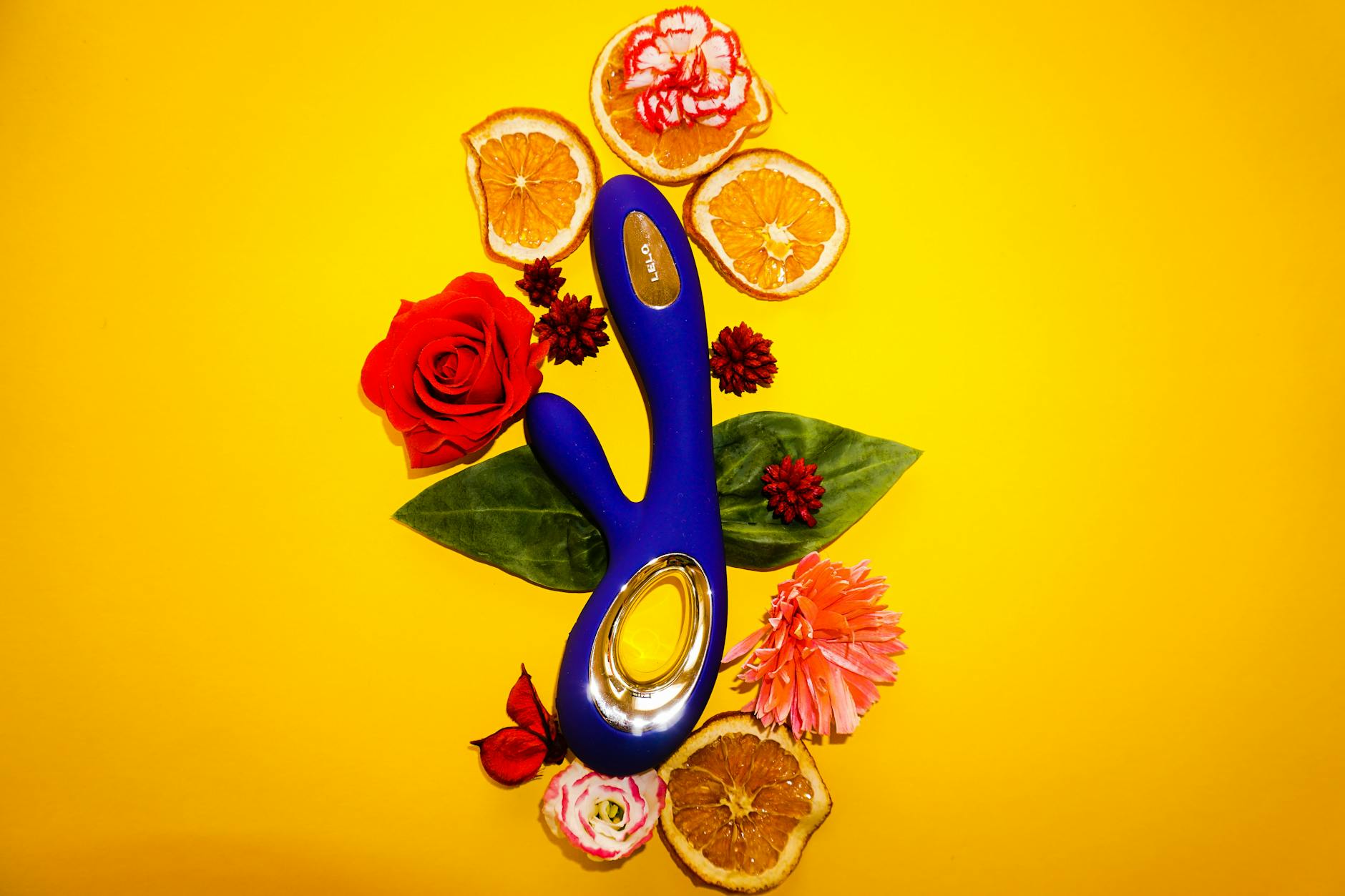
Let's be real about body image and pleasure
Body image worries are one of the quietest pleasure killers. You're not thinking about how you look or whether your partner is judging you. You're just distracted enough that arousal can't land. The brain gets stuck on a loop (thighs, stomach, the way you're positioned) instead of on sensation. And the harder you try to stop thinking about it, the worse it gets.
Here's what I've seen in my practice: people with intense body image concerns often find that partnered sex makes it harder to let go, even with a partner who's genuinely attracted to them. The pressure to perform, to be watched, to hold a certain posture. It all compounds the self-consciousness. Solo pleasure is supposed to be the escape hatch. But if you're stuck in your head, even being alone doesn't fix it.
That's where lemon clitoral vibrators change the game. Not because they're magic. Because they redirect attention.
How vibration bypasses the self-consciousness loop
When you use a clitoral vibrator, the sensory input is strong and specific. Your nervous system has to track it. This is basic neurology: the brain can only consciously process so much information at once. When there's intense sensation to follow, the narrative running in your head (the body image loop) loses bandwidth.
It's not that you stop thinking about your body. It's that your attention shifts from judgment to feeling. That shift matters more than you'd expect.
With lemon sexual toys like our lemon clitoral vibrator models, the sensation is concentrated enough to demand attention. You can't half-focus on it the way you might with a lower-intensity toy. That demand for presence actually works in your favor when self-consciousness is the problem.
Starting small when you're in your head
If body image anxiety is high, diving into a powerful toy can backfire. Your instinct might be to use a lower setting to feel less intense, less vulnerable. That actually keeps you more in your head because you're still scanning for sensation instead of being pulled into it.
Instead, start with the vibrator off your body entirely. Spend a few minutes just holding it, feeling the weight, noticing the texture. This is not foreplay. This is acclimatization. You're teaching your nervous system that this object is safe and familiar.
Then, apply it to your inner thighs first. Not the clitoris yet. The inner thigh has different nerve endings. Sensation there feels less exposed, less watched. Let yourself enjoy that for a few minutes. The goal is not arousal. The goal is to practice letting sensation land without immediately filtering it through a judgment layer.
After that, move to your clitoris. Start at pattern 1 or 2. You're not trying to come. You're noticing what the sensation feels like when your brain isn't scrambling to critique your body.
The partner conversation that actually helps
If you're using a lemon vibrator in a relationship, the conversation matters. But not the conversation you think.
Don't frame it as "I'm too self-conscious." That opens the door to reassurance theater, which doesn't fix the neurology. Instead, frame it as "I want to be more present. Using a vibrator helps me get out of my head, and that actually makes partnered sex better for both of us."
That's true. When you're not stuck in self-judgment, you can actually feel your partner, respond to them, be more present. You're not performing. You're there.
If your partner has questions about why you need a toy, the honest answer is often: "My brain gets in the way sometimes. This helps me bypass that noise." Most partners understand that immediately. It's not a reflection on them. It's you protecting the space where you can actually enjoy what's happening.
Building a solo ritual that feels empowering, not obsessive
When body image is the issue, solo pleasure can start to feel like a compensatory behavior. If you notice that, pause. You're not broken. You're just tipping into a pattern where the vibrator becomes a workaround instead of a tool.
Instead, build a ritual. Pick a time when you're relaxed. Set a boundary around it (not when you're stressed or dissociating, not as a way to numb). Light a candle, put your phone across the room, make the space feel intentional.
Then use your lemon adult toy without an outcome goal. Not "I need to come." Just "I'm exploring what feels good." Some sessions you'll have an orgasm. Some you won't. The metric isn't the ending. It's the time you spent present in your body instead of critiquing it.
This is the real work. Not the toy. The permission to be in your body without performance pressure.
When body image is tied to something deeper
If body image concerns are so intense that even a vibrator can't anchor you back to sensation, that's worth naming. Sometimes the self-consciousness isn't really about appearance. It's about trauma, shame, or a relationship that's made you feel unsafe in your own skin.
A toy can't fix that. Therapy can. In my practice, I've found that people who address the deeper layer (the why behind the body image spiral) often find that pleasure comes back naturally. The vibrator is a tool for the journey. It's not the whole journey.
If you're in that territory, I'd encourage you to work with a therapist alongside whatever pleasure practice you're building. That combination works.
The specific advantage of clitoral vibrators for this situation
Why lemon clitoral vibrators specifically? Because they're designed to deliver concentrated sensation without requiring penetration or complex positioning. There's no choreography to think about. You're not monitoring angles or depth or whether you're doing it right. You're just receiving sensation.
That simplicity is radical when you're trying to get out of your head. The lem vibrator line and other lemon sexual toy designs keep the experience narrow and focused. Less to think about. More to feel.
Moving forward
Body image and pleasure are linked, but they don't have to be locked together. You can notice the self-consciousness without letting it run your entire experience. A good vibrator, paired with patience and permission, helps you build that skill. Over time, the feedback loop shifts. You practice pleasure. You get better at staying present. Your nervous system learns that you're safe in your own body. That's the real win.
People also ask
Can using a vibrator make body image worries worse?
It can, if you're using it as punishment or numbing. If you're thinking "I hate how I look, so I'm using this to feel something," that reinforces the shame. But if you're using it as a tool to practice presence, it shifts the equation. The key is your internal narrative. Are you using it as a form of self-care or as an escape from self-rejection? One builds confidence. One deepens the wound.
How long does it take to feel less self-conscious during solo pleasure?
That varies wildly. Some people notice a shift within a few sessions. Others need weeks of consistent practice. The brain is plastic, but it doesn't rewrite overnight. If you're practicing weekly and still feel stuck after a month, that might be a signal that the body image concern is bigger than vibration can address alone. Therapy is worth considering.
Should I use a vibrator if I'm also in a relationship?
Absolutely. Solo pleasure and partnered pleasure are different. Using a vibrator alone doesn't replace partnered sex. It complements it by helping you build confidence in your own arousal, which actually makes partnered sex better. You know what you like. You're present. You're not performing.
What if my partner judges me for using a lemon vibrator?
That's a relationship issue, not a vibrator issue. A partner who judges your solo pleasure is signaling something about how they see your body or your autonomy. That's worth addressing directly. You might say: "My pleasure is not negotiable. Using a vibrator helps me feel good in my own body. I need that to be okay." If it stays not okay, that's information about the relationship.
Does the intensity of the vibrator matter for body image concerns?
Yes, but not in the way you might think. A very gentle vibrator can actually keep you more in your head because you're searching for sensation. A vibrator with clear, strong sensation (like lemon clitoral vibrators) anchors your attention faster. You don't need it to be painful or overwhelming. You need it to be noticeable enough that your brain stops narrating and starts receiving.
Can body image concerns come back even after I've worked through them?
Yes. Life happens. You age. Relationships shift. Stress peaks. Body image can cycle back. The good news is that once you've built the skill of being present with sensation, it gets easier to come back to that place. The vibrator becomes a reliable anchor. You know it works. That confidence carries forward.